
Simulation and Data Lab Computational Fluid Dynamics
Major Competencies
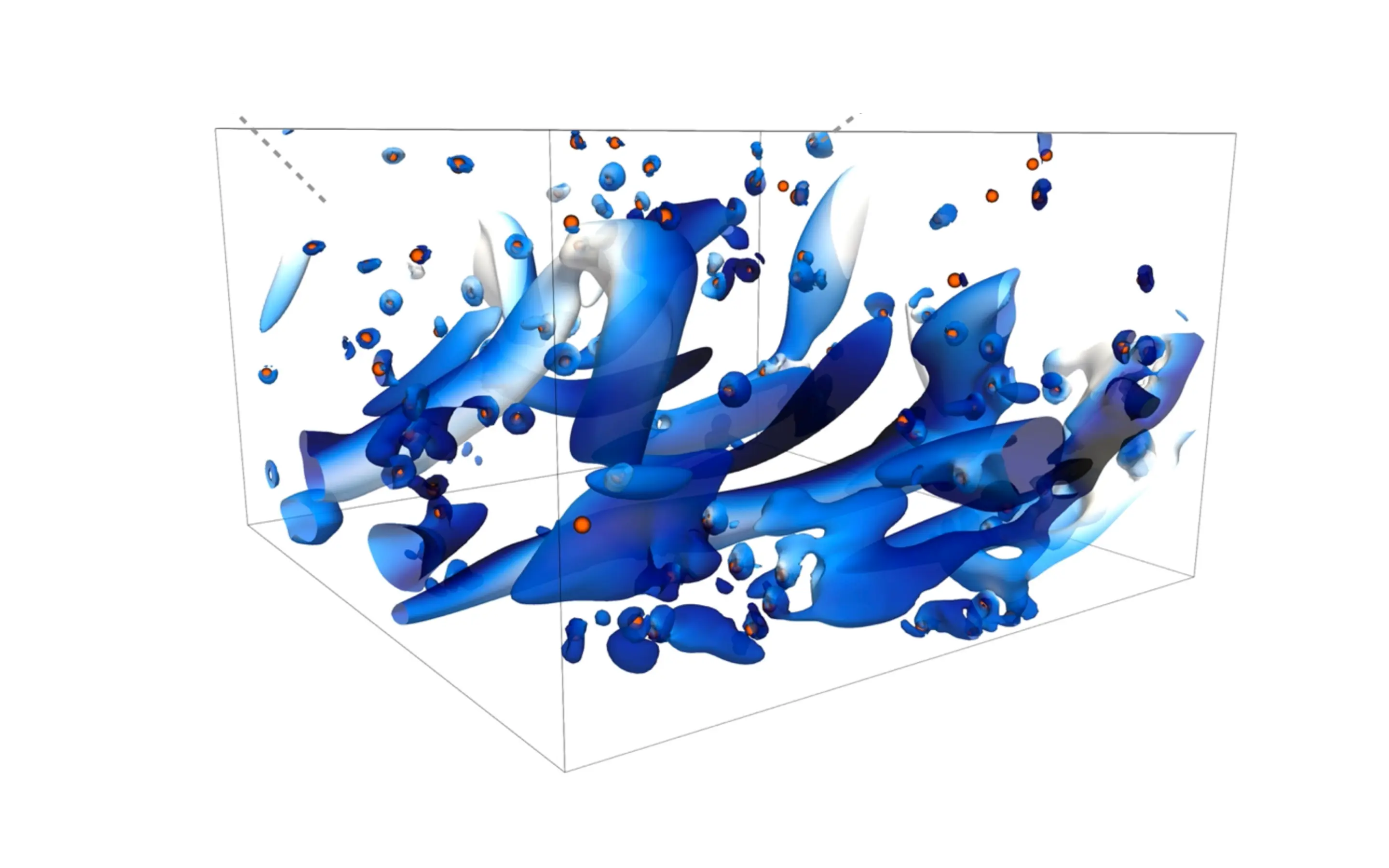
Advancement of computational fluid dynamics approach with or without machine learning, to broaden understanding of natural and industrial flows, with broad ranging applications for renewable energy and more
Leading Parallel Computing in CFD
The SimDataLab CFD is at the forefront of parallel computing in Computational fluid dynamics in Iceland, particularly at the University of Iceland. The lab not only develops parallel code applications in CFD but also extends support to users who have ventured into parallel application codes. As Iceland's representative in international projects focusing on CFD and parallel computing, the lab showcases its expertise and commitment to advancing the field.
High Scalability and Performance Optimization
The lab’s mission emphasizes fundamental and applied research in CFD engineering sciences, particularly for those utilizing parallel codes. Key features include high scalability, memory optimization, programming of hierarchic computer architectures, and performance optimization on computer nodes. Such competencies allow for the development and execution of advanced simulations and models that require massive computational power and precision.
Collaboration in International Projects and Access to Advanced Infrastructure
The SimDataLab CFD plays a significant role in the European project network concerning parallel computing. This international collaboration extends the lab's reach and influence, allowing for the exchange of knowledge and resources. Coupled with this is their infrastructure which boasts powerful parallel systems that focus on in-memory optimization, processing system architecture, and high scalability, ensuring that they remain at the cutting edge of CFD research.
Lab news and events
People
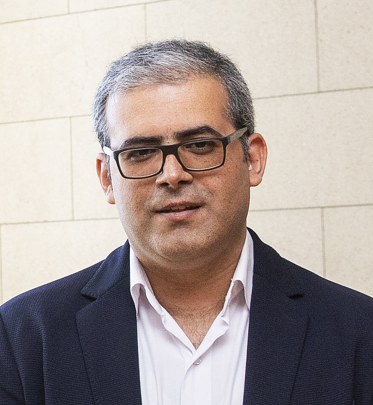
Reza Hassanian
Postdoctoral Researcher –School of Engineering and Natural Sciences (SENS), University of Iceland
Dr. Reza Hassanian received his PhD in Computational Engineering from the University of Iceland. He holds BSc and MSc degrees in Mechanical Engineering and a second master's degree in Sustainable Energy Engineering from Reykjavik University. He is the Head of the Simulation and Data Lab, specializing in Computational Fluid Dynamics. He is a Senior Member of IEEE and a member of APS, EPS, and EUROMECH.
Since 2020, he has actively contributed to European Commission-funded projects, including Co-RAISE, EuroCC 1/2/3, EDIH 1.0/2.0, and the COST Actions SCALES and CIPHER. He is the Principal Investigator (PI) of DL4PL, a project developing physics-informed AI for complex systems, and serves as PI or co-PI on multiple research projects utilizing the LUMI high-performance computing (HPC) system. He also serves on scientific committees for international conferences and national events, including Hackathon 2025/2026, focused on developing agentic AI systems.
His research interests include renewable energy, Computational Fluid Dynamics, artificial intelligence, high-performance computing, and turbulent flows. His work combines applied AI for engineering applications with fundamental research in fluid mechanics and energy production.
Alongside his research, he teaches university courses in energy systems, AI, HPC, and fluid dynamics. He regularly presents his research findings and developments at international conferences and scientific meetings.

Bergmann Óli Aðalsteinsson
Bergmann received his B.Sc. in Chemical Engineering from the University of Iceland in 2021 and his M.Sc. in Advanced Chemical Engineering from the University of Leeds in 2022. There his final project used the spectral element, Direct Numeral Simulations code, Nek5000 coupled with the Immersed Boundary method to study solid-particle collision dynamics in turbulent flows. Currently, he is working on a Ph.D. degree in Mechanical Engineering at the University of Iceland, which he started in the autumn/fall of 2023. His research focuses on turbulence modelling using, CaNS (Canonical Navier-Stokes, a fluid simulation code designed for massive-parallelisation/parallelization). His interest in CFD stems from industrial process design and modelling where he has experience from beer brewing and bio-fuel production.
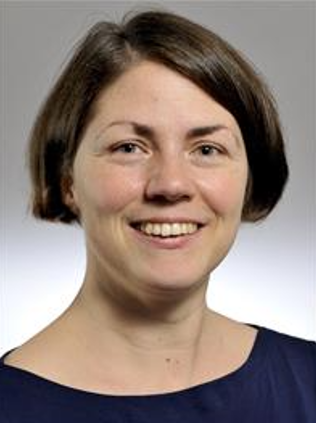
Clara Marika Velte
ADVISORY BOARD MEMBER
Clara Marika Velte is an Associate Professor at the Department of Civil andMechanical Engineering, Fluid Mechanics, Coastal and Maritime section inDanmarks Tekniske Universitet (DTU) Denmark. She is Head of the TurbulenceCentre of Excellence at DTU, funded by the Poul Due Jensen Foundation. The mainobjective of her team is to develop a novel, robust theory based on acombination of advanced experiments and mathematical analysis. To be able todescribe turbulence using mathematics, the concept of waves is applied andcoupled back to the governing equations of fluid motion. She leads theUniEqTURB - Universal Equilibrium and Beyond project funded by the EuropeanResearch Council (ERC); its main objective is to test the (range of) validityof the classical turbulence theory, as it was defined in the spirit ofRichardson and Kolmogorov. Clara focuses on basic and applied turbulenceresearch using tools developed and customized for each specific researchquestion. She expressed that her profound professional passion lies in fluidmechanics, with a particular emphasis on turbulence.
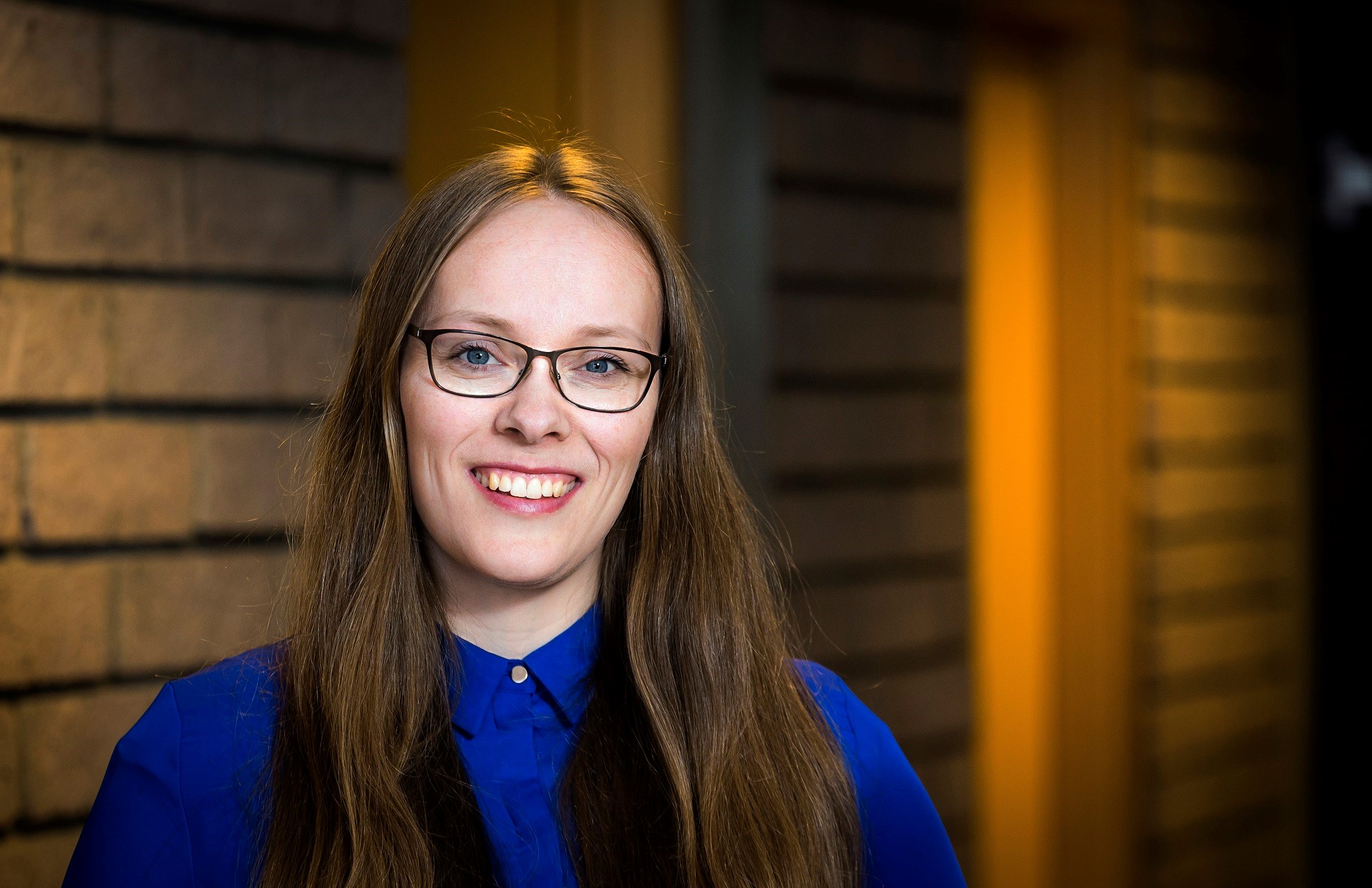
Dr. Ásdís Helgadóttir
Development and implementation of numerical methods for partial differential equations with applications in Fluid Dynamics, Heat Transfer and Bio Engineering is my main research focus. Those applications call for governing equations that are often nonlinear and may have an irregular interface. The location of the interface needs to be accurately known to correctly enforce the boundary conditions at it. This may be a challenge, especially if the interface is moving. These problems generally have multiple scales, meaning that the difference between the smallest scale that needs to be resolved and the largest scale is vast. This calls for immense computational power where HPC comes to the rescue.
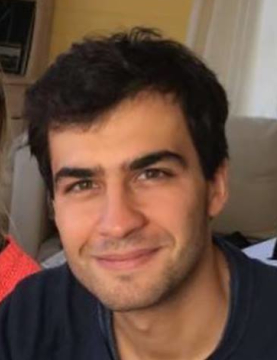
Dr. Pedro Costa
Turbulent multiphase flows abound in the environment and industry. These flows are three-dimensional, chaotic and multiscale by nature, giving rise to remarkable and at times dramatic phenomena. Direct Numerical Simulations of turbulent flows are first-principles simulations that resolve all spatial and temporal scales of the system. Simulating turbulent multiphase flows poses the additional challenge of imposing appropriate kinematic/dynamic compatibility conditions at fluid-fluid or particle-fluid interfaces, while the interface itself moves and deforms with the flow. These challenges make these first-principles simulations difficult, resulting in an unbalance between the limited fundamental knowledge of the physics of these flows, and their prevalent nature. Our research revolves precisely around the development of numerical methods to tackle these flows with high-fidelity, and their exploitation using HPC to unveil the underlying physics of these complex systems.

Mansoor Shademan
I received my B.Sc. degree in Mechanical Engineering (Heat & Fluids) from South Tehran Branch of Islamic Azad University, Tehran, Iran in 2013 and M.Sc. degree from the University of Sistan and Baluchestan, Zahedan, Iran in 2018. My M.Sc. thesis dealt with CFD simulation of Phase Change Materials in a shell-and-tube system, and my Ph.D. project is on CFD simulation of multiphase flow in geothermal wells.
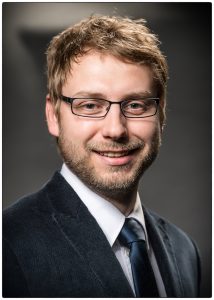
Dr. -Ing. Andreas Lintermann
Dr.-Ing. Andreas Lintermann is a postdoctoral researcher at Forschungszentrum Jülich, a member of the Helmholtz Association, Germany. At the Jülich Supercomputing Centre (JSC), he is heading the Simulation and Data Laboratory ‘‘Highly Scalable Fluids & Solids Engineering’’, which is also part of the Jülich Aachen Research Alliance Center for Simulation and Data Science (JARA-CSD). His research focuses, amongst others, on lattice-Boltzmann methods, artificial intelligence, high-performance computing, heterogeneous computing on modular supercomputing architectures, high-scaling meshing methods, efficient multi-physics coupling strategies, and bio-fluidmechanical analyses of respiratory diseases. He is the coordinator of the European Center of Excellence in Exascale Computing “Research on AI- and Simulation-Based Engineering at Exascale” (CoE RAISE).
Projects & Cooperations
All IHPC ProjectsSelected Publications
Journals
Hassanian, R., Helgadóttir, Bouhlali, L. & Riedel, M. An experiment generates a specified mean strained rate turbulent flow: Dynamics of particles, jan. 2023, Í: Physics of Fluids. 35, 1, 015124.
Hassanian, R., Yeganeh, N., Helgadóttir, Á. & Riedel, M. A Novel Implicit Model Determines the Photovoltaic Panel Temperature and Environmental Effects, 5 March. 2023, APS March Meeting 2023.
Hassanian, R., Helgadóttir, Á. & Riedel, M. A wake loss model asymmetry induced by the circulation of a vertical axis wind turbine, 12 June. 2023, 2023 International Conference on Future Energy Solutions, FES 2023. Institute of Electrical and Electronics Engineers Inc., (2023 International Conference on Future Energy Solutions, FES 2023).
Hassanian, R., Myneni, H., Helgadóttir, Á. & Riedel, M. Deciphering the dynamics of distorted turbulent flows: Lagrangian particle tracking and chaos prediction through transformer-based deep learning models, 1 July. 2023, Í: Physics of Fluids. 35, 7, 075118.
Hassanian, R., Helgadóttir, Á. & Riedel, M. Iceland Wind Farm Assessment Case Study and Development: An Empirical Data from Wind and Wind Turbine, 1 April. 2023, Í: Cleaner Energy Systems. 4C
Hassanian, R., Helgadóttir, Á. & Riedel, M. Deep Learning Forecasts a Strained Turbulent Flow Velocity Field in Temporal Lagrangian Framework: Comparison of LSTM and GRU: Comparison of LSTM and GRU, 3 November. 2022, Í: Fluids. 7, 11, 344.
Hassanian, R., Riedel, M., Helgadottir, A., Yeganeh, N. & Unnthorsson, R. Implicit Equation for Photovoltaic Module Temperature and Efficiency via Heat Transfer Computational Model, 21 February. 2022, Í: Thermo.
Hassanian, R., Riedel, M., Helgadóttir, Á., Costa, P. S. & Bouhlali, L. Lagrangian Particle Tracking Data of a Straining Turbulent Flow Assessed Using Machine Learning and Parallel Computing, 25 May 2022, 33rd Parallel Computational Fluid Dynamics (ParCFD) 2022.
Z. Ahmed, D. Izbassarov, P. Costa, M. Muradoglu, and O. Tammisola. Turbulent bubbly channel flows: Effects of soluble surfactant and viscoelasticity. Comput. Fluids : 104717 (2020)
N. Scapin, P. Costa, and L. Brandt. A volume-of-fluid method for interface-resolved simulations of phase-changing two-fluid flows J. Comput. Phys. 407 : 109251 (2020).
B. Indurain, D. Uystepruyst, F. Beaubert, S. Lalot, Á. Helgadóttir. Numerical investigation of several twisted tubes with non-conventional tube cross sections on heat transfer and pressure drop. Journal of Thermal Analysis and Calorimetry. 140: 1555-1568 (2020). https://doi.org/10.1007/s10973-019-08965-4
Á. Helgadóttir, S. Lalot, F. Beaubert, H. Pálsson. Mesh Twisting Technique for Swirl Induced Laminar Flow Used to Determine a Desired Blade Shape. Applied Sciences. 8 (10): 1865 (2018). https://doi.org/10.3390/app8101865
Á. Helgadóttir, A. Guittet, F. Gibou. On Solving the Poisson Equation with Discontinuities on Irregular Interfaces: GFM and VIM. International Journal of Differential Equations. 2018: Article ID 9216703 (2018). https://doi.org/10.1155/2018/9216703
P. Costa, L. Brandt, and F. Picano. Interface-resolved simulations of small inertial particles in turbulent channel flow. J. Fluid Mech. 883 : A54 (2020)
P. Costa. A FFT-based finite-difference solver for massively-parallel direct numerical simulations of turbulent flows. Comput. Math. Appl. 76 : 1853 – 1862 (2018)
P. Costa, F. Picano, L. Brandt, and W.-P. Breugem. Universal Scaling Laws for Dense Particle Suspensions in Turbulent Wall-Bounded Flows. Phys. Rev. Lett. 117 (13) : 134501 (2016)
Á. Helgadóttir, Y.-T. Ng, C. Min, F. Gibou. Imposing Mixed Dirichlet-Neumann-Robin Boundary Conditions in a Level-Set Framework. Computers and Fluids. 121: 68-80 (2015). https://doi.org/10.1016/j.compfluid.2015.08.007
J. Papac. Á. Helgadóttir, C. Ratsch, F. Gibou. A level set approach for diffusion and Stefan-type problems with Robin boundary conditions on quadtree/octree adaptive Cartesian grids.Journal of Computational Physics. 233: 241-261 (2013). https://doi.org/10.1016/j.jcp.2012.08.038
M. Mirzadeh, M. Theillard, Á. Helgadóttir, D. Boy, F. Gibou. An Adaptive, Finite Difference Solver for the Nonlinear Poisson-Boltzmann Equation with Applications to Biomolecular Computations. Communications in Computational Physics. 13 (1): 150-173 (2013). https://doi.org/10.4208/cicp.290711.181011s
Á. Helgadóttir, F. Gibou. A Poisson-Boltzmann solver on Irregular Domains with Neumann or Robin boundary conditions on Non-Graded Adaptive Grid. Journal of Computational Physics. 230 (10): 3830-3848 (2011). https://doi.org/10.1016/j.jcp.2011.02.010